
Found a Lost Dog? Safe Steps to Help It Get Home
Found a dog alone? Learn how to keep everyone safe, check for identification, contact local services and help reunite the dog with its owner.

If you find a dog that may be lost, first keep it away from traffic and avoid chasing or cornering it. Approach only if it seems safe, check for a collar or other identification, then contact the local animal control service, shelter, or police non-emergency line for guidance. Share a clear description with nearby lost-pet channels, but protect the dog's safety and the owner's privacy.
A frightened dog may run, bite, or hide even if it is usually friendly. Keep children and other animals back, and do not try to move the dog into a car or home unless you can do so safely and local guidance supports it.
If the dog is injured, in immediate danger, or behaving aggressively, contact the appropriate local emergency or animal-response service instead of trying to handle it. Make a note of where and when you saw the dog; that information can help responders and its owner.
- Keep the dog and bystanders away from traffic, and do not chase or corner it.
- Approach only if it seems safe; call trained responders for injury, aggression, or immediate danger.
- Check visible identification and ask a shelter, clinic, or animal service about a microchip scan.
- Report the location to local services, then use cautious lost-pet notices to reach the owner.
First, Keep the Dog and People Safe
Make the Area Safer
Keep yourself, the dog, and other people out of traffic before attempting anything else. If the dog is near a road, do not step into moving traffic or chase it; instead, alert nearby drivers from a safe place and call local animal control or emergency services if there is an immediate hazard.
Ask children, cyclists, and other dog owners to give the animal space, and keep your own dog leashed well away. A loose dog can bolt when surrounded, while a calm, open route away from danger may give it room to settle without making it feel trapped.
If you find the dog while traveling, checking dolar ve euro kurları may help you understand costs quoted in a different currency if temporary care or transport is being discussed. Keep immediate safety decisions separate from cost questions, and ask the relevant local service what assistance it can provide before agreeing to pay for anything.
- Stay out of the road.
- Keep children and pets back.
- Ask bystanders not to crowd the dog.
- Call local responders if danger is immediate.
Judge Risk Before Handling
Do not assume a dog is safe to touch because it has a collar or looks familiar. Watch its posture from a distance: stiff legs, growling, bared teeth, repeated lunging, or frantic escape attempts are reasons to avoid handling and call trained responders.
A dog that is injured, trapped, or showing signs of severe distress needs prompt professional help. Give the service a precise location, describe what you can see, and mention nearby hazards such as traffic, water, or a damaged fence so responders can prepare.
If the dog seems calm, do not rush to lift it, attach a lead, or guide it into a vehicle. Let the animal choose whether to approach, and keep a clear exit path; sudden restraint can frighten even a gentle dog and create a bite or escape risk.
Approach Calmly and Check for Immediate Needs
Let the Dog Set the Pace
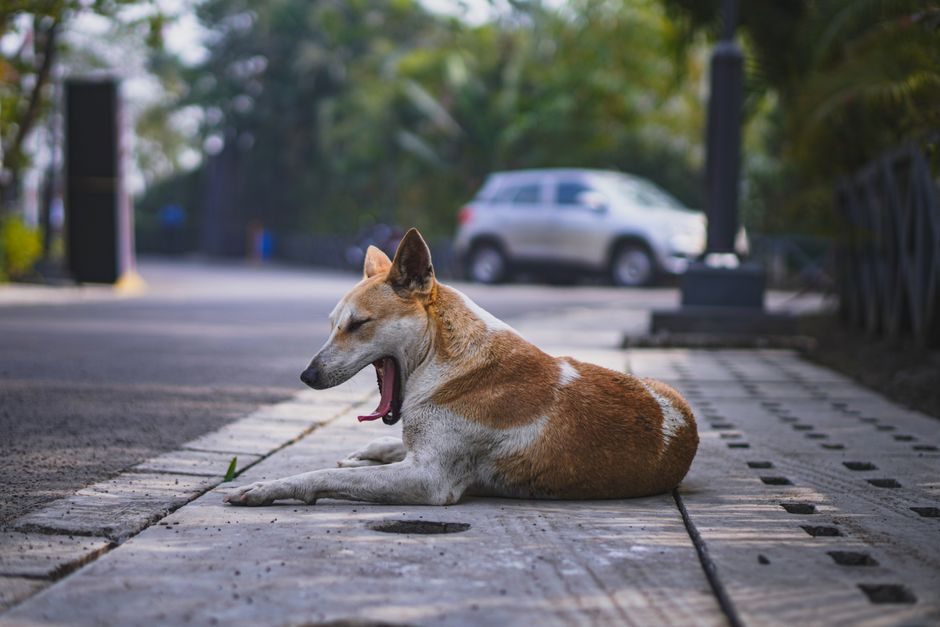
Approach slowly from the side rather than walking straight at the dog, and stop if it backs away or becomes tense. Speak softly, keep your body turned slightly sideways, and avoid leaning over, staring directly, or reaching toward its head.
- Chasing the dog; stay back and call trained help.
- Crowding it with bystanders; ask people to give it space.
- Grabbing its collar; check identification only when safe.
Give the dog time to observe you before trying to help. If it stays relaxed and comes closer, offer a hand low and still for it to sniff; do not grab its collar, even if you can see identification, unless immediate danger makes a quick intervention unavoidable.
Avoid using food to lure a dog toward a road, enclosed space, or unfamiliar vehicle. If you have water and can set it down at a safe distance, that may help a thirsty dog without requiring contact, but do not force it to eat or drink.
- Move slowly and pause often.
- Keep your body turned sideways.
- Let the dog approach you.
- Do not reach over its head.
Notice Urgent Health Needs
Look for obvious distress without touching the dog: heavy bleeding, difficulty breathing, inability to stand, or signs of heat or cold exposure call for urgent veterinary or animal-response help. Describe what you observe rather than attempting treatment that could worsen an injury or put you at risk.
If the dog is in a safe, sheltered spot, keep the surroundings quiet while waiting for guidance. Do not give medication, human food, or an unfamiliar treat; a dog may have an allergy, illness, or injury that is not apparent from a distance.
If the dog is wearing a harness or lead caught on an object, avoid pulling it free if that could tighten the restraint or cause panic. Tell the responder exactly what is caught and where, and follow their instructions about whether to stay nearby or move away.
Look for Identification and Contact Details
Check Visible Identification
Once the dog is calm and it is safe to get close, look for a collar tag with a phone number or other contact details. Read the information without removing the collar, and call the listed number; if no one answers, leave a brief message and continue contacting local animal services.
- ☐ Read any visible tag only when the dog is calm.
- ☐ Call the listed number and leave a concise message.
- ☐ Ask a shelter or veterinary clinic about scanning for a microchip.
- ☐ Share identifying details privately with a claimant.
A tag may be worn, difficult to read, or missing even when the dog has an owner. Do not treat the absence of a collar as proof that the animal is abandoned, and avoid posting a full phone number or address publicly when sharing a found-dog notice.
If arranging transport or temporary care abroad, a tool to döviz kurları çevir can help you compare a quoted amount with your home currency. Confirm what the charge covers directly with the provider, and do not delay contacting local animal services while sorting out payment details.
- Read the tag without removing the collar.
- Call the listed contact and leave a message.
- Keep private phone numbers out of public posts.
- Ask local services about a safe microchip check.
| Method | Best use | Caution |
|---|---|---|
| Collar tag | Call visible contact details | Do not grab a frightened dog |
| Shelter scan | Check for a microchip | Call ahead for safe handling |
| Veterinary clinic scan | Ask about chip identification | Confirm the clinic can receive the dog |
| Lost-pet notice | Compare owner reports | Keep one identifying detail private |
Arrange a Microchip Scan
A microchip can link a dog to its registered keeper, but it is not a live tracker and cannot usually be read with a phone. Ask a shelter, veterinary clinic, or animal control service whether it can scan the dog and contact the chip registry if a number is found.
Do not attempt to scan or restrain a frightened dog yourself. Call ahead to check whether the service can safely receive the animal, and explain its behavior, location, and any visible injury so staff can advise you on transport or collection.
A scan may return outdated contact details, so no immediate response does not mean the dog has no owner. Ask the service what happens next and keep a record of where the dog was found, when it was scanned, and which organization is handling the report.
Report the dog to the local animal control service, municipal animal-response team, or shelter that handles found animals in that area.
Report the Dog and Check Local Lost-Pet Channels
Contact the Right Local Service
Report the dog to the local animal control service, municipal animal-response team, or shelter that handles found animals in that area. If you are unsure who is responsible, call a nearby shelter or veterinary clinic and ask which service takes reports; use the police non-emergency line where that is the local procedure.
- Write down the exact location and time.
- Call the local animal-control or shelter service.
- Give a clear description and your safe callback details.
- Follow instructions about staying, transport, or collection.
Give the exact place and time you saw the dog, the direction it was moving, and a clear description of its size, coat, and any collar or harness. Include your safe contact details and say whether the dog is still at the location or has been moved by an authorized responder.
Follow local instructions about whether to remain nearby, bring the dog to a facility, or wait for collection. Some areas require found animals to be reported through a specific authority, so check before taking the dog home or arranging informal care.
- Call the local animal-response service.
- Share the location, time, and direction of travel.
- Describe the dog and visible identification.
- Follow local rules for collection or temporary care.
Use Community Lost-Pet Notices
Check nearby shelter listings and established local lost-pet groups, since an owner may already be searching. Post only a useful description, the general area, and a way to contact you; leave one distinctive feature or identifying detail unshared so you can verify a claimant.
Use a clear, recent photo taken from a safe distance, and do not put yourself or the dog at risk to get a better picture. Avoid publishing a full address, personal phone number, or details that could let someone falsely claim the animal.
When someone responds, ask them to describe identifying details and provide proof of ownership, such as matching records or photographs, before handing over the dog. Coordinate any reunion through a shelter or animal service if you feel uncertain, and update your notice once the dog is safely reunited.
What to Do If You Find a Dog While Traveling
Pause Before Changing Plans
If you find a dog while traveling, stop somewhere safe before deciding where to take it. Keep the dog away from traffic and give yourself time to assess whether it can be helped without putting anyone at risk. A busy roadside or unfamiliar area calls for extra caution; do not try to coax the dog across moving traffic.
If you are driving, park legally and use hazard lights only when appropriate, without blocking the road. Ask another adult to watch the dog from a safe distance while you contact local animal services or police using a non-emergency number. Avoid leaving children alone with an unknown dog, even if it seems calm.
Travel can make familiar options harder to find because local rules, rescue services and veterinary arrangements vary. Tell responders your exact location, the direction the dog was moving and any nearby landmarks. If you must leave, give a reachable phone number and ask which agency can take responsibility for follow-up.
Coordinate With Local Helpers
Contact the animal-control agency, municipal shelter or police service responsible for the place where you found the dog. A hotel desk, campsite host or roadside assistance operator may know the local procedure, but ask them to connect you with the responsible animal service rather than assuming they can take custody.
If you cross a border or are far from home, do not transport the dog onward without advice from local authorities. Movement can separate a found dog from nearby owners searching on foot, and travel rules may require documentation. Ask whether a local shelter, veterinarian or authorized rescue can scan for a microchip.
Record the time, location and names or contact details of anyone who takes over. If no one can attend promptly and the dog is safe with you, ask an authority whether temporary care is appropriate and where to bring it. Do not post sensitive details, such as every identifying feature, before an owner can confirm them.
Plan for Possible Transport or Care Costs
Ask Before Agreeing to Fees
Before taking a found dog to a clinic, shelter or boarding facility, ask who is responsible for transport and any charges. A good Samaritan may be able to help, but the agency handling the case can explain its local process. Confirm whether you are authorizing treatment, temporary care or only a microchip scan.
When a local helper quotes a fee in lira, checking dolar kaç Türk lirası can help you assess the amount against your own currency before agreeing to pay. Treat the conversion as a rough comparison, because exchange rates and any charges applied by your bank or payment provider may differ. Still, settle responsibility with the service provider directly.
Ask for the expected cost and what it covers before handing over payment details. If the dog needs urgent veterinary attention, tell the clinic that you found it and ask how to proceed without assuming you have authority to approve non-emergency treatment. Keep written records of any agreement and share them with the responsible animal service.
Arrange Safe Temporary Care
If authorities advise you to keep the dog briefly, choose a quiet, secure place away from your own pets and household traffic. A closed room with water and a washable floor can work better than a yard where the dog might escape. Keep children and other animals separated until the dog's health and behaviour are clearer.
Use a leash or carrier only if the dog can be handled safely; do not force equipment onto a frightened or injured animal. Ask the agency or a veterinarian how to manage food, medication or other needs while you wait. Keep the dog in a contained area, and check that doors and gates are secure.
Make a clear handover plan before temporary care begins, including who will collect the dog and when you should contact the service again. If you cannot safely house the dog, say so immediately and ask about another authorized option. A prompt, honest limit is safer than agreeing to care you cannot provide.
Common Mistakes That Can Delay a Reunion
Keep Details Accurate
Describe the dog honestly when contacting a shelter or posting a notice, and distinguish what you observed from what you guessed. For example, report a limp you saw rather than diagnosing an injury, and say the dog appeared frightened rather than labeling it aggressive. Clear, factual details help staff match reports and advise you appropriately.
Do not publish every identifying feature in a public post. Leave one distinctive detail undisclosed so a person claiming the dog can describe it, and ask for a recent photo or veterinary record when appropriate. This does not replace official checks, but it can help screen out mistaken claims while keeping the dog's information useful.
Avoid repeatedly moving the dog between locations or changing the contact person without updating the agency. Each handoff can lose details about where the dog was found, what was checked and who is responsible. Keep one simple record of the timeline and tell every new helper which authority is managing the case.
Avoid Unverified Handovers
Do not hand the dog to the first person who says it belongs to them without checking. Ask the claimant to describe a withheld feature, show a current photo or provide another reasonable proof of ownership, then involve animal services if anything feels uncertain. A calm verification protects both the dog and a genuine owner.
Avoid arranging a meeting in an isolated place or letting a claimant pressure you into bypassing the agency. Choose a public, safe setting and, where available, ask shelter staff or animal-control officers to help with the handover. If a person becomes threatening, step away and contact local authorities instead of trying to settle the dispute alone.
Do not assume that a friendly dog is safe to approach, or that a frightened dog has been mistreated. Behaviour can change with pain, noise and unfamiliar surroundings. Give the animal space, keep your movements measured and let trained responders handle difficult restraint or conflict whenever possible.
Small Steps That Improve the Chances of Getting Home
Make Useful Records
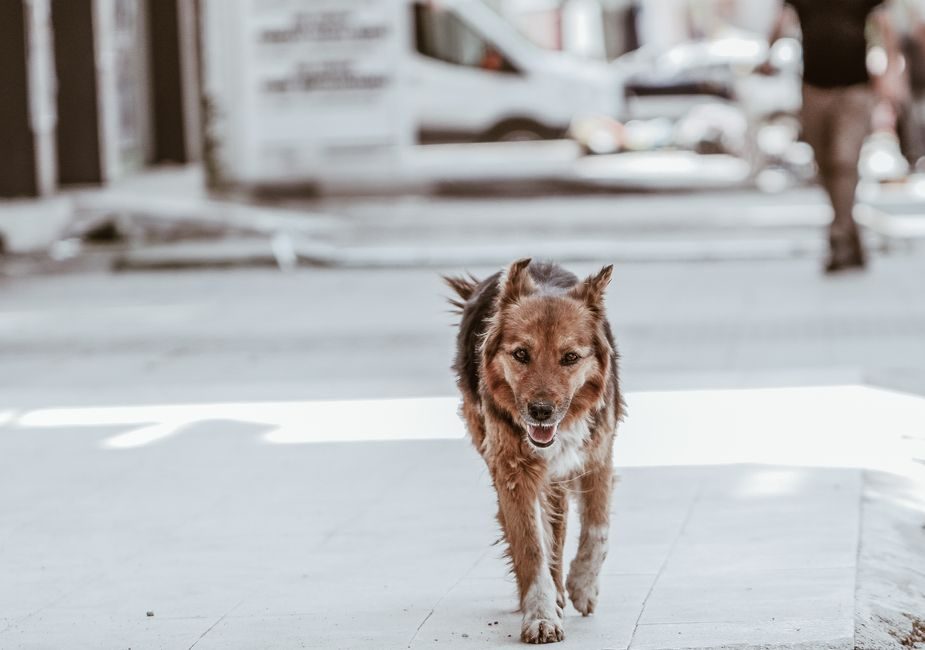
Take a clear photo from a safe distance if the dog can be photographed without approaching or startling it. Capture the whole animal and any visible collar or harness, but do not delay calling for help to get a better picture. Note the time, precise location, direction of travel and nearby roads or landmarks.
- Record the location and time as soon as practical.
- Share factual details with the responsible local service.
- Update public notices when the dog's status changes.
Write down observations while they are fresh, including the dog's approximate size, coat colour, distinctive markings and condition. Keep guesses separate from facts, and avoid sharing personal information about yourself publicly. Send the useful details to the agency handling the case so they can compare them with reports from owners.
If you post online, use a local lost-pet group or community channel and direct people to the responsible shelter or animal service. Include where and when the dog was found, a safe contact method and instructions not to chase it if it is still at large. Update or remove the post when the dog is reunited or transferred.
Follow Through Until Handover
Ask the agency when to check back and what information would help it identify the dog's owner. If you leave the area, make sure the responder has your current contact details and knows whether the dog remains loose, is with you or has been transferred. A brief, accurate update can prevent duplicated searches and confused handovers.
When a shelter or veterinarian scans for a microchip, ask whether the registered contact can be reached and what happens if the details are outdated. A chip scan may not immediately identify an owner, so continue following the local service's instructions rather than treating a negative result as proof that the dog has no home.
If the dog is reunited, confirm the handover through the agency where possible and thank anyone who helped. If no owner is found right away, ask which service will continue the case and how to send further information. Staying reachable and keeping records makes later identification easier, even after you have left the scene.
Frequently asked questions
Should I feed a dog I find outside?Do not offer food immediately if the dog is frightened, injured, behaving unpredictably or being assessed by responders. Food can cause a dog to approach traffic or put your hands too close to its mouth. If the dog is safely contained and seems settled, ask animal services or a veterinarian whether food is appropriate, especially if it may need urgent examination.
What should I do if the dog runs away?Do not chase it, since pursuit may push it toward traffic or farther from the area. From a safe location, note the direction it went, its appearance and the time, then contact local animal control, a shelter or police using the appropriate non-emergency route. Share a photo if you already have one, and alert nearby residents or businesses without encouraging anyone to chase.
Can I keep a found dog while looking for its owner?Rules for holding a found dog vary by location, so contact the responsible animal service before taking it home or keeping it overnight. The service can explain reporting requirements, microchip checks and safe temporary-care options. If you are authorized to provide short-term care, keep the dog securely separated from people and pets, and agree on a clear handover plan.
How can I tell whether someone claiming the dog is its owner?Ask the person to describe a distinctive feature you have not shared publicly, and request a recent photo or other reasonable proof of ownership. Do not rely on a single detail if the situation feels uncertain; ask the local shelter or animal service to help verify the claim. Arrange any handover in a safe place and involve authorities if anyone pressures or threatens you.
Help the Dog Reach the Right People
The safest help is often a steady handover: protect the dog from immediate danger, contact the local service responsible for found animals, and share precise observations. Avoid chasing, unverified handovers and promises of care you cannot safely provide. If you must leave, make sure someone responsible has the location, your contact details and a clear account of what has happened.
If you come across a dog that may be lost, pause somewhere safe and call the appropriate local animal service before moving it. Keep a brief record of the location, time and any handover, and follow up as agreed. These simple actions help responders work efficiently and give an owner a better chance of finding their dog.
Add Pet Safety Gear & Accessories for Dogs on the Go as a preferred source on Google


